
Regulations
A2 vs STS-01 – how they differ and which one to choose
A2 lets you fly a class C2 drone closer to people in the open category; STS-01 covers the specific category with a C5 drone. Differences and choice.
- By Power Technology training team
- 11 min read
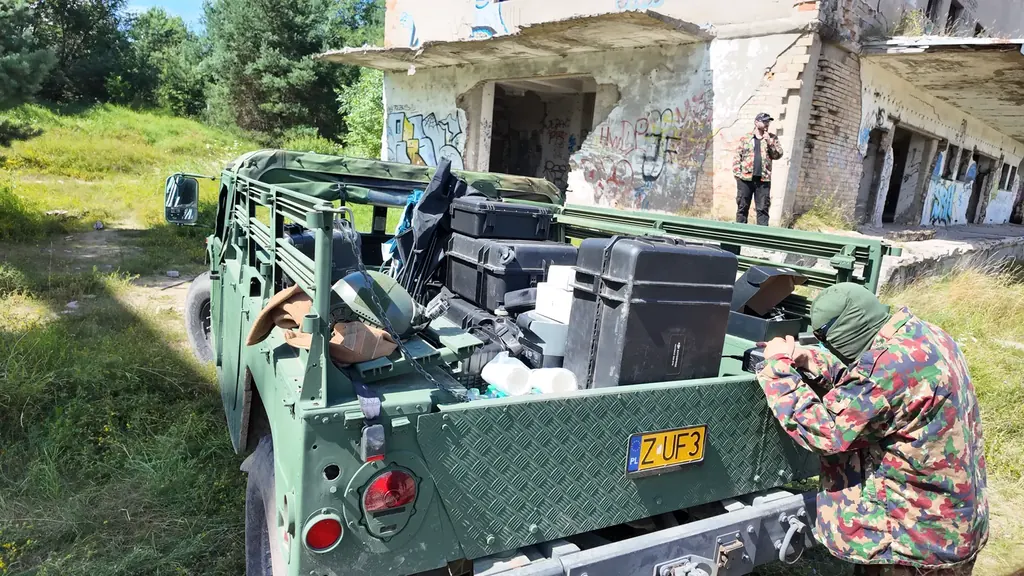
The A2 certificate lets you fly a class C2 drone closer to uninvolved people in the open category – at a distance of at least 30 m, or as little as 5 m in low-speed mode. The STS-01 certificate concerns the specific category: visual line of sight flights over a controlled ground area in a populated environment, with a class C5 drone, after the operator has submitted a declaration to the national aviation authority (in Poland, the Civil Aviation Authority – ULC). If you fly FPV for fun, neither is mandatory, but A2 organises your knowledge of weather and ground risk, while STS-01 opens the way to professional work in the specific category.
Two categories, two different legal regimes
EU rules divide drone operations into three categories: open, specific and certified. The open category covers low-risk flights that do not need an authority's approval: the drone weighs less than 25 kg, flies within the pilot's visual line of sight (VLOS), no higher than 120 m from the closest point of the surface of the earth, does not fly over assemblies of people and does not drop anything1. It is divided into subcategories A1, A2 and A3, which differ in the permitted distance from people, the drone class and the required competencies2.
The specific category begins where the limits of the open category end. In it, the operator must either obtain an authorisation based on a risk assessment or submit a declaration of compliance with a standard scenario (STS) described in Appendix 1 to Regulation 2019/9473. There are two scenarios: STS-01 covers VLOS flights over a controlled ground area in a populated environment with a class C5 drone, and STS-02 covers flights beyond visual line of sight with airspace observers over a controlled ground area in a sparsely populated environment, with a class C6 drone.
So A2 is the upper level of the open category, and STS-01 is the entry point to the specific category. They are not two rungs of the same ladder, but two separate regimes with different rules.
What the A2 certificate gives you and how to get it
Subcategory A2 is intended for operations in which the drone works close to people for a significant part of the flight. You must meet three conditions: the drone does not fly over uninvolved people and keeps a horizontal distance of at least 30 m from them (5 m with low-speed mode active and after assessing the weather, the drone's performance and the terrain), the pilot holds an A2 certificate of competency, and the drone bears a class C2 label and has remote identification and geo-awareness switched on2.
The path to the certificate follows a strictly defined order2:
- A1/A3 online training and exam: 40 multiple-choice questions, pass mark 75%. In Poland you take it in the system at drony.gov.pl4; operators registered in another EU country take it with their own national aviation authority.
- Self-practical training under subcategory A3 conditions, i.e. in a place without uninvolved people and at least 150 m from residential, commercial, industrial and recreational areas.
- A declaration that you have completed this training, and an additional theoretical exam: at least 30 questions on meteorology, drone flight performance and technical and operational mitigations for ground risk, with a 75% pass mark.
In Poland the additional exam is conducted by an entity designated by a decision of the President of ULC, which sends the authority the exam report and your declaration of practical training56. The certificate is valid for five years; during that time you can renew it by demonstrating your competencies again or by completing refresher training7.
What the STS-01 certificate gives you and how to get it
STS-01 is the scenario for work that requires flights in a populated environment, but within a separated, controlled area that uninvolved people cannot enter. The key operational conditions8:
- the drone remains within the pilot's visual line of sight at all times, and the flight is no higher than 120 m;
- the controlled ground area consists of the flight geography, a contingency area extending at least 10 m further, and a ground risk buffer – for a flight at 120 m with a drone of up to 10 kg the buffer is at least 25 m;
- ground speed below 5 m/s;
- a class C5 drone with active remote identification;
- an operations manual, an emergency response plan and functioning means of terminating the flight.
The pilot needs two documents8. The first is the certificate of theoretical knowledge: holding A1/A3 competencies, you take an additional exam of at least 40 questions, or at least 30 if you already hold an A2 certificate; the pass mark is 75%9. The second is the accreditation of completion of STS-01 practical skill training, issued by an entity recognised by the authority or by an operator who has submitted an STS-01 declaration and meets the requirements of Appendix 3 to the Regulation. In Poland the theoretical exam is conducted by a designated entity, the practical training takes place on a class C5 drone, and the competency appears in the pilot's profile at drony.gov.pl once both reports have been submitted10. The certificate of theoretical knowledge is valid for five years8.
The pilot's certificate alone is not enough to carry out an operation. The operator – a company, or you as a private individual – submits a declaration of compliance with the scenario to the President of ULC and may start flying after receiving confirmation that it is complete1110.
A2 and STS-01 side by side
| Criterion | A2 | STS-01 |
|---|---|---|
| Category | open, subcategory A2 | specific, standard scenario |
| Drone class | C2 | C5 |
| Distance from people | min. 30 m, 5 m in low-speed mode | flight over a controlled area without uninvolved people |
| Prerequisites | A1/A3 and self-practical training | A1/A3 (A2 shortens the exam) |
| Theoretical exam | min. 30 questions, 75% pass mark | min. 40 questions (30 with A2), 75% pass mark |
| Practical training | self-practical, confirmed by a declaration | at a recognised entity or an STS-01 operator, with a skills assessment |
| Operator formalities | none in addition | declaration to ULC, operations manual, emergency plan |
| Validity | 5 years | 5 years (certificate of theoretical knowledge) |
FPV goggles and A2 and STS-01
For an FPV pilot one thing is key: neither of these qualifications changes the rules on keeping the drone in sight. In the open category, flying with goggles requires an observer who stands next to you and watches the drone with the naked eye1213. Until 12 October 2026 a temporary exemption issued by the President of ULC is in force in Poland, which, within set limits including a maximum of 50 m above the ground, allows FPV flights without maintaining VLOS – before you fly, check whether it is still valid or has been extended14.
In STS-01, flying with goggles is currently not possible, because the pilot must keep the drone in visual line of sight personally. EASA states explicitly that among the standard scenarios only STS-02 allows FPV, with an airspace observer and a UA observer13. In addition, typical FPV drones carry neither a C2 nor a C5 label, so in practice you fly them in subcategories A1 or A3, whatever certificates you have in your wallet.
When to choose A2 and when STS-01
The choice depends on what you want to be doing a year from now, not on which document sounds more serious.
- You fly FPV as a hobby, away from people – A1/A3 competencies, operator registration and insurance are enough. You can take A2 for the knowledge, but with a drone that is not class C2 it will not give you any new options.
- You film with a C2-labelled drone near people – you need A2.
- You want to work professionally in the specific category, e.g. on inspections, on a film set or in a city within a separated area – aim for STS-01. The same competencies, i.e. the STS knowledge certificate and the practical training accreditation, are required under the predefined risk assessment PDRA-S01. On that basis an operator can obtain an authorisation for similar operations without having to use a class C5 drone15.
- You plan to get both – start with A2. The STS exam then shrinks from 40 to 30 questions, and you have already mastered part of the material9.
You can take the A2 and STS-01 exams on site during the 7-day course in Borne Sulinowo; if you already hold STS-01, you join from day two.
How to prepare for both exams
The exams are multiple-choice, but the questions test understanding rather than memory. Before A2, practise everything you confirm in your declaration: preparing the operation, preparing for the flight, flying in normal conditions and responding to abnormal situations such as a lost link or a weak GNSS signal5. Keep a simple flight log: date, place, weather, what you practised and what went wrong. This will make an honest declaration and revision before the test easier.
For STS-01, focus on topics the open category barely touches: defining the operational volume and buffers, emergency procedures, the emergency response plan and assessing air risk. In the practical assessment, your working method counts: site reconnaissance, a briefing with the team, a checklist and calm execution of emergency procedures, including terminating the flight.
If you are under 18, you take part in training and exams with the consent of a parent or legal guardian. In Poland the minimum age for a remote pilot in the open and specific categories is 1416.
Key points
- A2 is a subcategory of the open category: class C2 drone, at least 30 m from uninvolved people, 5 m in low-speed mode.
- STS-01 belongs to the specific category: VLOS over a controlled ground area, class C5 drone, operator declaration submitted to ULC.
- Both qualifications require prior A1/A3 competencies, and holding A2 shortens the STS exam from 40 to 30 questions.
- Neither replaces the observer for FPV flights in the open category, and flying with goggles is currently not allowed under STS-01.
- A1/A3 is enough for recreational FPV; choose STS-01 if you plan to work in the specific category.
Commission Implementing Regulation (EU) 2019/947, Article 4(1) (consolidated text, EUR-Lex): https://eur-lex.europa.eu/legal-content/EN/TXT/?uri=CELEX:02019R0947-20250501 ↩
Regulation (EU) 2019/947, Annex, Part A, UAS.OPEN.010–UAS.OPEN.040 (consolidated text, EUR-Lex): https://eur-lex.europa.eu/legal-content/EN/TXT/?uri=CELEX:02019R0947-20250501 ↩ ↩ ↩
Regulation (EU) 2019/947, Article 5 and Annex, Part B, UAS.SPEC.020 and Appendix 1 (EASA, Easy Access Rules for Unmanned Aircraft Systems, June 2026 edition): https://www.easa.europa.eu/en/document-library/easy-access-rules/easy-access-rules-unmanned-aircraft-systems-regulations-eu ↩
Civil Aviation Authority of Poland (ULC), Open category – information (in Polish): https://ulc.gov.pl/drony/kategoria-otwarta-informacje ↩
Civil Aviation Authority of Poland (ULC), How to conduct the theoretical knowledge exam for remote pilot competency in subcategory A2 (PDF, in Polish): https://ulc.gov.pl/_download/Drony/Wdra%C5%BCanie_przepis%C3%B3w_UE/Jak_prowadzi%C4%87_egzamin_z_wiedzy_teoretycznej_do_uzyskania_kompetencji_pil_.pdf ↩ ↩
Civil Aviation Authority of Poland (ULC), Information on theoretical exams conducted by designated entities (in Polish): https://ulc.gov.pl/drony/prowadzenie-szkolen/informacja-o-przeprowadzaniu-egzaminow-teoretycznych-przez-wyznaczone-podmioty ↩
Regulation (EU) 2019/947, Annex, Part A, UAS.OPEN.070 (consolidated text, EUR-Lex): https://eur-lex.europa.eu/legal-content/EN/TXT/?uri=CELEX:02019R0947-20250501 ↩
Regulation (EU) 2019/947, Appendix 1 to the Annex, Chapter I, UAS.STS-01.010–UAS.STS-01.040 (EASA, Easy Access Rules for UAS): https://www.easa.europa.eu/en/document-library/easy-access-rules/easy-access-rules-unmanned-aircraft-systems-regulations-eu ↩ ↩ ↩
Regulation (EU) 2019/947, Appendix 1 to the Annex, Chapter I, Attachment A – theoretical knowledge examination and practical skill assessment for STS-01 (EASA, Easy Access Rules for UAS): https://www.easa.europa.eu/en/document-library/easy-access-rules/easy-access-rules-unmanned-aircraft-systems-regulations-eu ↩ ↩
Civil Aviation Authority of Poland (ULC), Examination and training for STS (in Polish): https://ulc.gov.pl/drony/prowadzenie-szkolen/egzaminowanie-i-szkolenie-do-sts ↩ ↩
Regulation (EU) 2019/947, Article 12(5) (consolidated text, EUR-Lex): https://eur-lex.europa.eu/legal-content/EN/TXT/?uri=CELEX:02019R0947-20250501 ↩
Regulation (EU) 2019/947, Article 4(1)(d) and Annex, UAS.OPEN.060(2)(b) and (4), and GM1 UAS.OPEN.060(4) (EASA, Easy Access Rules for UAS): https://www.easa.europa.eu/en/document-library/easy-access-rules/easy-access-rules-unmanned-aircraft-systems-regulations-eu ↩
EASA, FAQ – Is beyond visual line of sight (BVLOS) operation possible for flying drones with goggles (FPV)?: https://www.easa.europa.eu/en/faq/140038 ↩ ↩
Civil Aviation Authority of Poland (ULC), FPV – decision of the President of ULC No. LBSP.503.1.2026.ULC.1 (exemption valid from 12 February to 12 October 2026, in Polish): https://ulc.gov.pl/drony/odstepstwa-altmoc/fpv ↩
EASA, AMC4 Article 11 – PDRA-S01, version 1.2, points 5.3.4–5.3.5 (Easy Access Rules for UAS): https://www.easa.europa.eu/en/document-library/easy-access-rules/easy-access-rules-unmanned-aircraft-systems-regulations-eu ↩
Polish Aviation Law Act of 3 July 2002 (Journal of Laws of 2025, item 1431), Article 156zb (in Polish): https://isap.sejm.gov.pl/isap.nsf/DocDetails.xsp?id=WDU20250001431 ↩